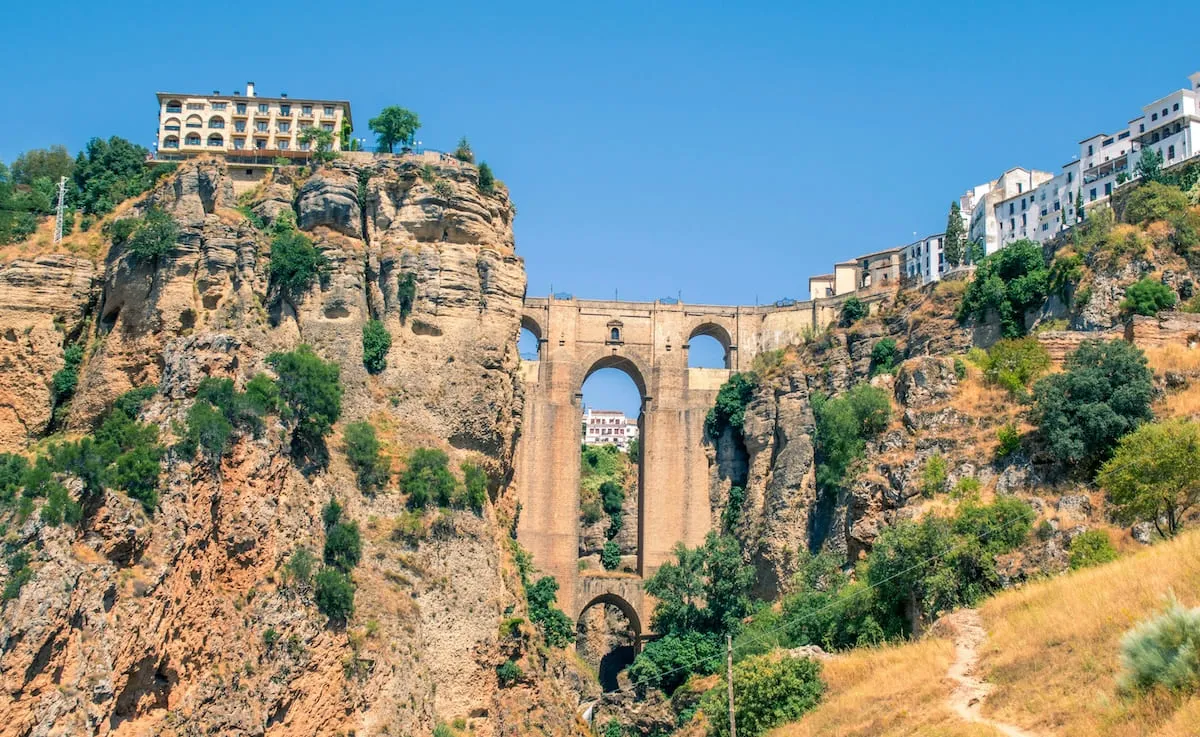
Cross the Puente Nuevo from the bullring side and you leave the Mercadillo, the quarter built after the Christian conquest, for La Ciudad. Ferdinand the Catholic took the town on 22 May 1485, after a long siege. The street plan, the gates and some of the houses go back to the centuries before that date.
The old town is not only La Ciudad. To the south, outside the walls, is the San Francisco quarter; below, to the east, the old suburbs of San Miguel, with the Arab baths and the oldest bridges.
The gates and walls: entering La Ciudad
The main way in from the south is the Puerta de Almocábar, built in the 13th century. Its name comes from the Arabic al-maqabir, the cemetery: the town's main burial ground lay just outside, as Muslim custom required. Three gates in a row and two half-round towers, which housed the guard, made it one of the main entrances to the medina.
In the middle of the 16th century, under Charles V, a square entrance block was added in front of it, with a crenellated Renaissance gateway and a large royal coat of arms held by the imperial eagle. That is the Puerta de Carlos V, the face you see first when you arrive from Plaza de San Francisco. It was on that square that the Castilian troops gathered in May 1485.
The walls continue on both sides. To the west, the Puerta del Cristo, also called de los Molinos, and the Puerta del Viento open onto the Albacara, an enclosure that protected the mills and could shelter livestock in times of danger. To the east, the walls of the Cijara form a double line around the old Islamic suburbs, down towards the baths.
At the other end of the old town, on Calle Real, the Arco de Felipe V replaced the old Arab "bridge gate" in 1742, the year after the first Puente Nuevo collapsed: the town needed a bigger entrance for all the traffic forced back onto this route. Look up at the outer face for the Anjou shell and the Bourbon arms.
Our route: come in through the Almocábar, cross La Ciudad northwards, and leave by the Arco de Felipe V towards the baths.
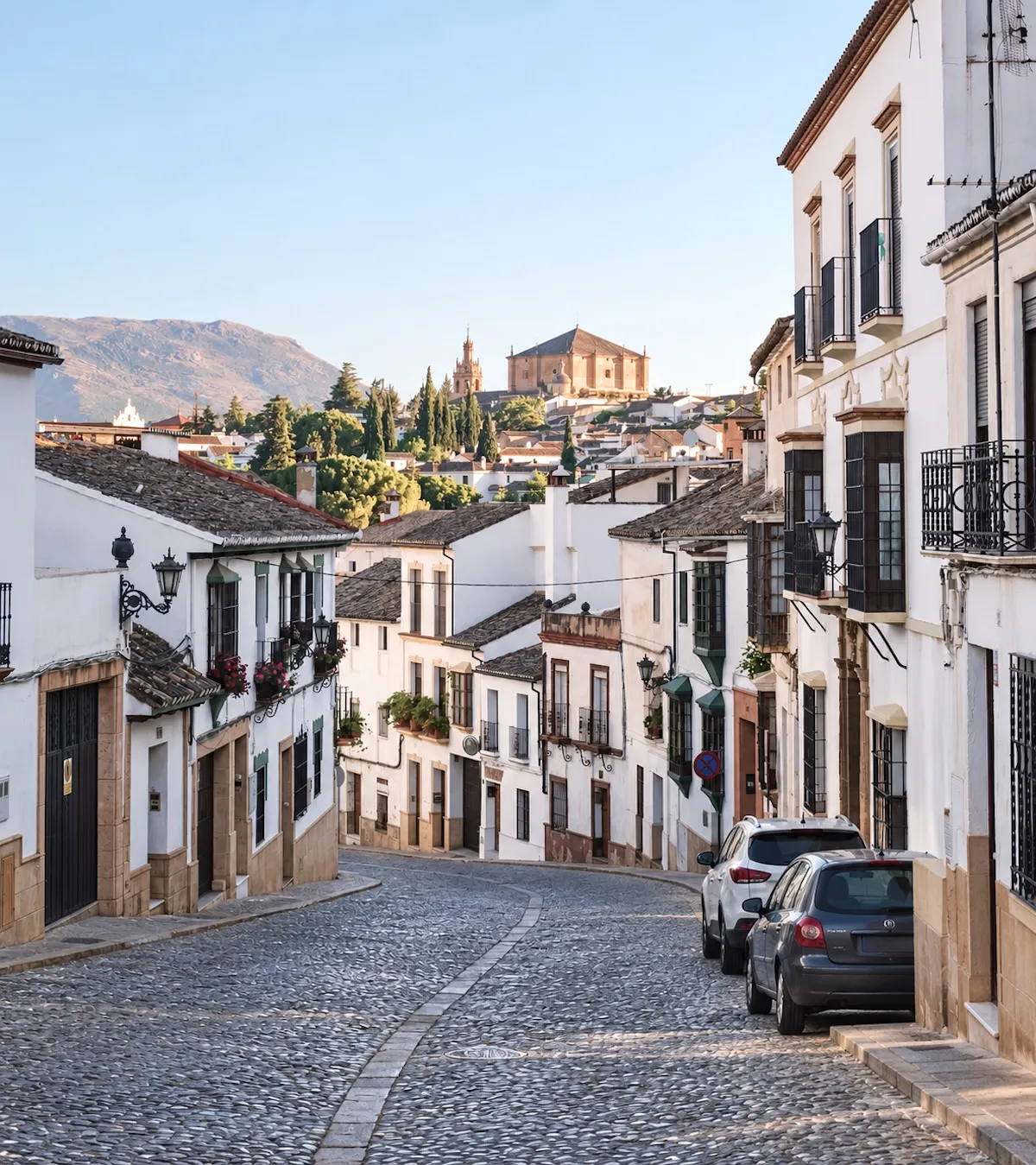
- Puerta de Almocábar and Puerta de Carlos V: south end of La Ciudad, facing Plaza de San Francisco, free.
- Arco de Felipe V: Calle Real, near the Puente Viejo, free.
Casa del Rey Moro and Palacio de Mondragón
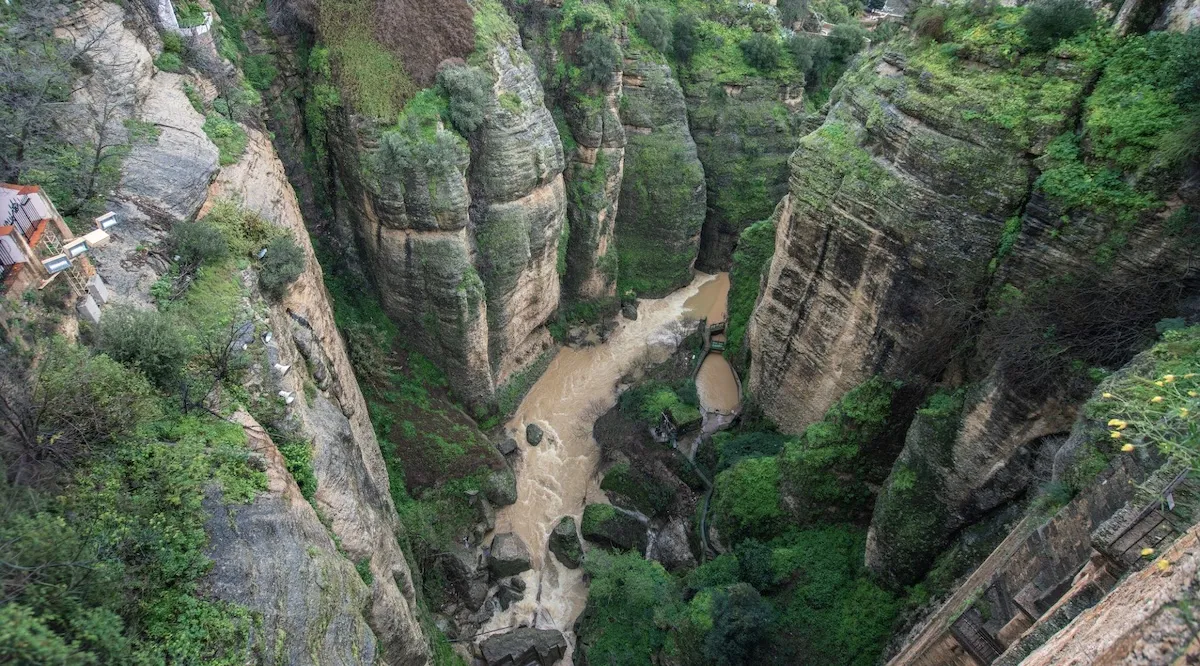
The Casa del Rey Moro, on Calle Santo Domingo, is the stop for the gardens and the water mine cut into the gorge. We cover it in detail, with our reservations, in what to see in Ronda. In short: €10, €3 for children under 12, open daily from 10:00 to 21:00, and more than 200 damp steps down to the river.
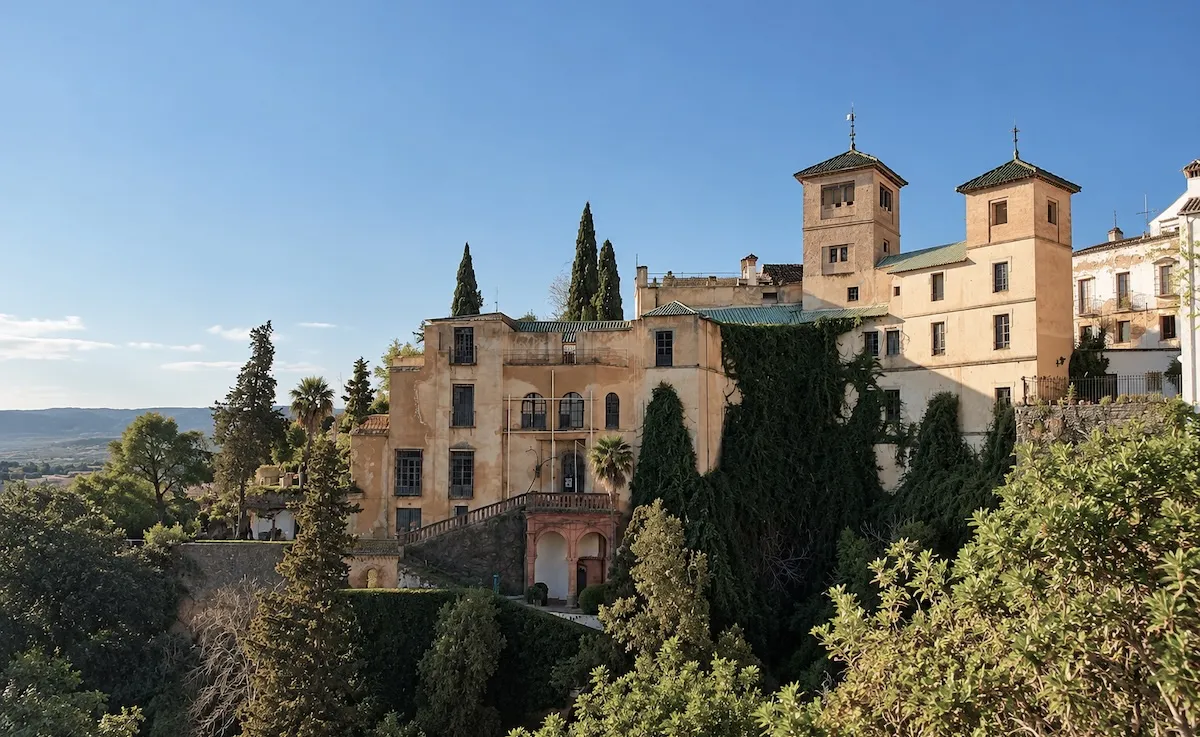
The Palacio de Mondragón, also called the palace of the Marqués de Villasierra, is the town's museum: when you search for the "Museo de Ronda", this is it. Tradition links the site to the Marinid ruler Abomelik, in the 14th century; the palace you visit today dates from the 16th to the 18th centuries. Come for the patios and the gardens as much as for the collections.
¡Ojo!: entry is free for EU citizens on Tuesdays and Wednesdays from 9:30 to 11:30.
- Palacio de Mondragón: €5, €3.50 reduced, free under 8.
- Hours: Tuesday to Friday 9:30 to 19:00; Monday and Saturday 10:00 to 14:00 and 15:00 to 18:00; Sundays and holidays 10:00 to 15:00.
The museums of the old town
The Museo del Bandolero, on Calle Armiñán, no longer appears on the tourist office's list of monuments and museums, updated on 1 October 2026, and some listings report it closed. Check on the spot before planning around it. If the bandits of the Serranía are what brought you, the Antigua Bodega La Sangre, a 17th-century winery on Calle González Campos, shows a collection on the history of banditry, with a wine tasting included in the €10 ticket.
On the same Calle Armiñán, the Museo Lara is a private collection with a bit of everything: clocks, weapons, cinema and photography, a romantic museum, and rooms on the Inquisition and witchcraft. On Plaza del Gigante, the Museo Joaquín Peinado shows the work of the Ronda-born painter, along with ceramics and engravings by Picasso; it is free on Monday mornings. On Calle Tenorio, the Casa de Don Bosco is a small modernist palace from the early 20th century.
- Antigua Bodega La Sangre: €10 with wine tasting, daily 12:00 to 18:00.
- Museo Lara: €4, daily 11:00 to 19:00.
- Museo Joaquín Peinado: €4, free under 14 and on Mondays from 10:00 to 14:00; 10:00 to 14:00 and 16:00 to 19:00.
- Casa de Don Bosco: €3, daily 10:00 to 20:30.
Casa del Gigante
The Casa del Gigante is a small Nasrid palace from the 14th century, laid out in the eastern way, around a patio with a pool. Its name comes from two large stone reliefs of human figures that once decorated its corners, possibly Phoenician or Punic in origin. Only one survives, and its shape is barely recognisable, so do not expect a giant.
At €2.50, it is the cheapest of the municipal sites, and it is free on Tuesdays and Wednesdays from 9:30 to 11:30. Pair it with Mondragón on the same morning: both open at 9:30 on weekdays.
- Price: €2.50, €2 reduced, free under 8.
- Hours: same as the Palacio de Mondragón.
- Where: Plaza del Gigante.
Churches and convents
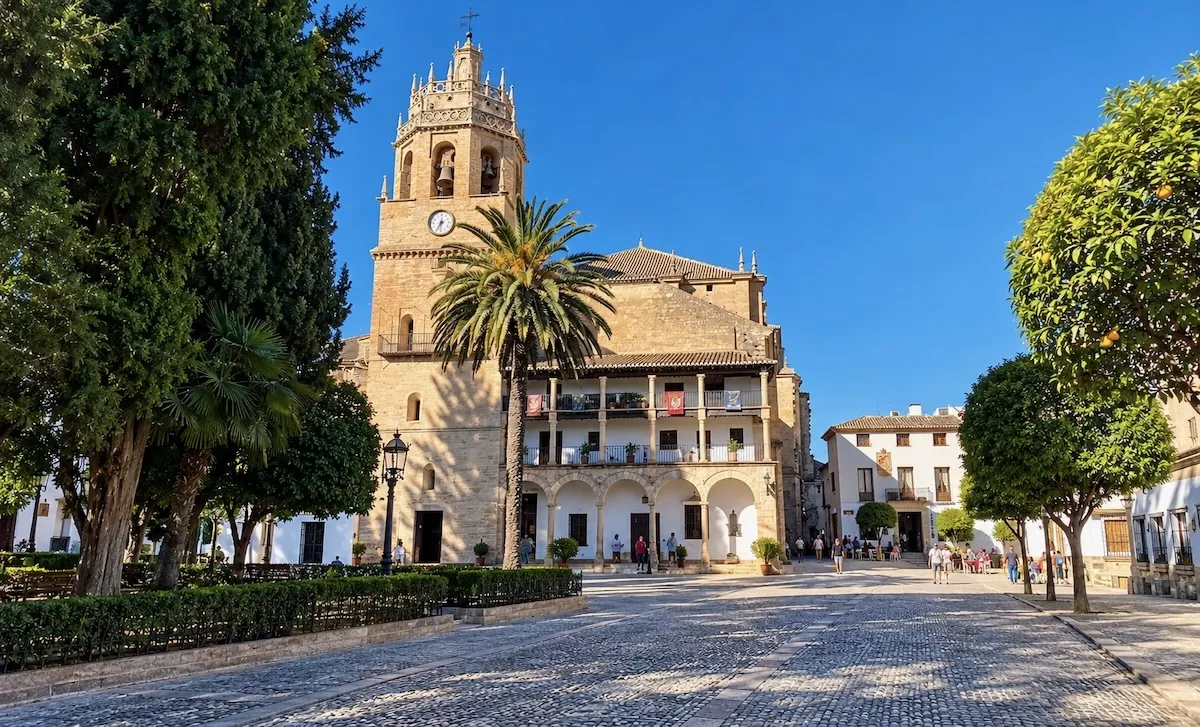
Santa María la Mayor is the main church of La Ciudad, on Plaza Duquesa de Parcent. People sometimes call it Ronda's cathedral, but it is a collegiate church, a colegiata: Ronda has no cathedral. It stands on the site of the town's main mosque and was built in the time of the Catholic Monarchs, in the 15th century. Inside, look for the 13th-century arch of the mihrab, the clearest trace of the mosque. The €4.50 ticket includes an audio guide, and for that arch alone it is worth it.
Further south, near the Almocábar gate, the Iglesia del Espíritu Santo is a church-fortress built under Ferdinand the Catholic. It opens only in the mornings, from Tuesday to Saturday, for €1.
At the end of the Puente Nuevo, on Calle Armiñán, the Convento de Santo Domingo was ordered by the Catholic Monarchs on 25 July 1485, two months after the conquest, though building only started in the early 16th century. It was long the seat of the Inquisition tribunal. After the Dominicans left, it was a market and a carpenters' workshop, survived a fire, and was bought by the town in the 1980s. It is now the Palacio de Congresos, the conference centre. The church keeps its three naves under a painted Mudéjar wooden ceiling. Entry costs €1, but hours change with events: call before you go.
The Alminar de San Sebastián, a small brick tower, is the minaret of one of the medina's mosques. It later became the bell tower of the church of San Sebastián, which has since disappeared. Its two lower sections date from the 14th century, the top one from after the conquest.
Two more churches are across the bridge, in the Mercadillo, and both are free. The Convento de la Merced keeps a relic of the hand of Saint Teresa of Ávila, and the nuns sell their cakes from Monday to Saturday. The Iglesia de la Virgen de la Paz is the Baroque sanctuary of Ronda's patron saint.
- Santa María la Mayor: €4.50 with audio guide; Monday to Saturday 10:00 to 19:00, Sunday 10:00 to 12:30 and 14:00 to 19:00.
- Espíritu Santo: €1; Tuesday to Saturday 10:00 to 14:00.
- Santo Domingo (Palacio de Congresos): €1; hours vary, call +34 952 87 87 95.
- La Merced: free; cake sales Monday to Saturday 10:30 to 13:15 and 17:00 to 18:45.
Squares and streets
Plaza Duquesa de Parcent, the old Plaza Mayor, is the heart of La Ciudad. Besides Santa María la Mayor, it holds the town hall, the Casa Consistorial, a former militia barracks from 1734. It was built over the old arcaded shops of the Plaza Mayor, and its stone arcades run along the whole façade, one floor above another. At the door, the two coats of arms are those of Ronda and of Cuenca, its twin town. The church of María Auxiliadora, on the same square, is free to enter.
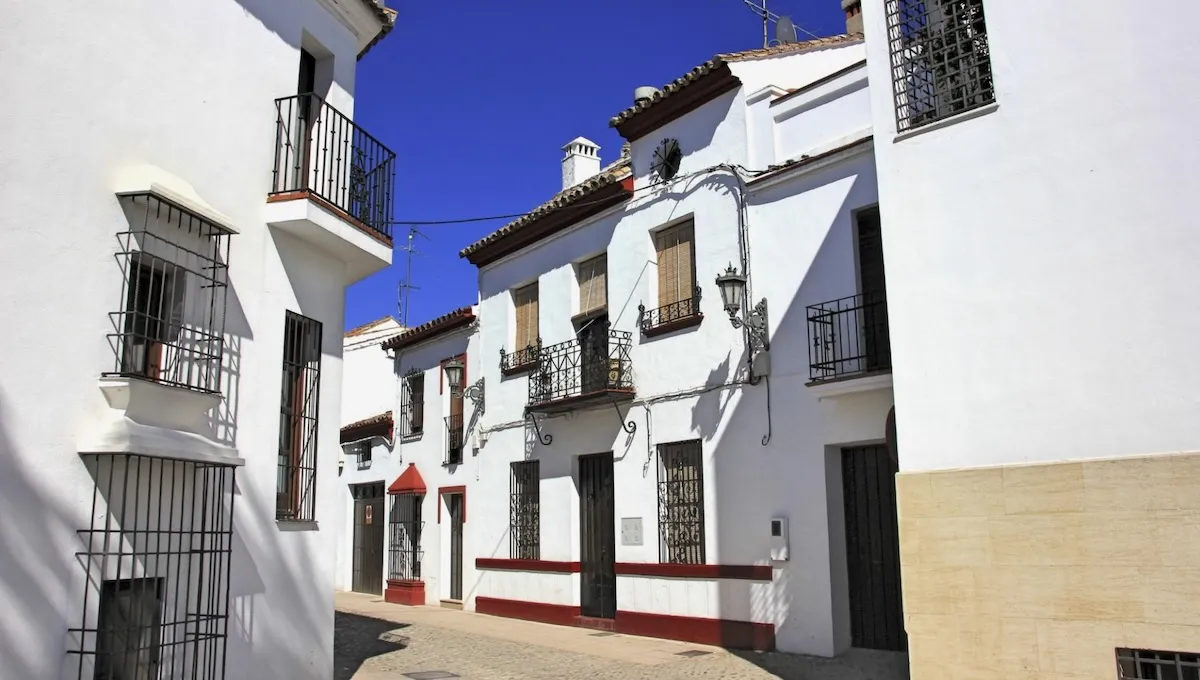
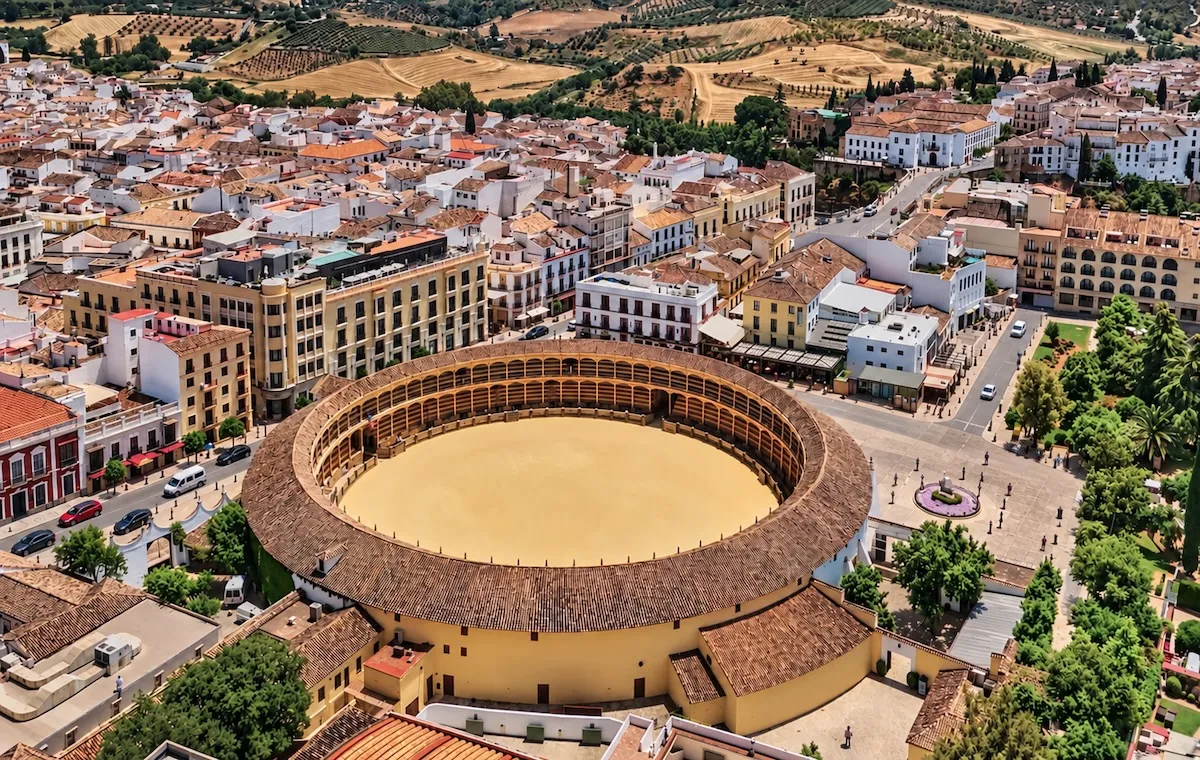
Across the bridge, Plaza del Socorro is the main square of the Mercadillo. The underground car park beneath it has been closed since late August 2026, so do not drive there: our guide to parking in Ronda lists the alternatives. Calle Virgen de la Paz, also in the Mercadillo, is the street of the bullring.
The quarters: Mercadillo, San Francisco and San Miguel
La Ciudad is the oldest part, the former medina. The Mercadillo, north of the gorge, grew up after the conquest, around what are now the bullring and Plaza del Socorro.
San Francisco lies outside the Almocábar gate, around the square where the Castilian troops gathered in 1485, with the walls on one side.
San Miguel, the old lower quarter, is at the bottom of the town, east of La Ciudad, inside the Cijara walls. Here are the Baños Árabes, from the 13th and 14th centuries, among the best preserved in the Iberian Peninsula, and the two oldest bridges, the Puente Árabe, also called de San Miguel, and the Puente Viejo. The walk down from the Arco de Felipe V takes a few minutes; allow longer for the climb back up.
- Baños Árabes: €4.50, €3 reduced, free on Tuesdays and Wednesdays from 9:30 to 11:30; same hours as the Palacio de Mondragón.
Staying in the historic centre
These four hotels from our selection of hotels in Ronda are in the old town itself, on Calle Tenorio, Calle Marqués de Moctezuma and Calle Espíritu Santo.
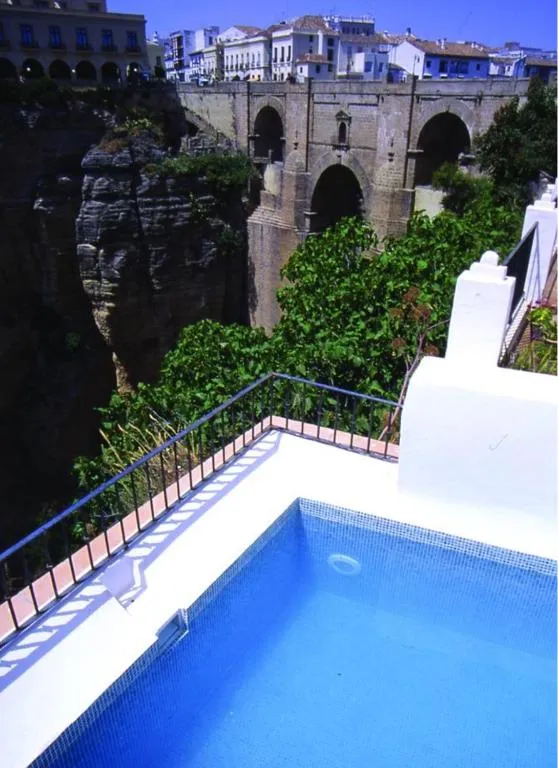
Hotel Montelirio
A four-star hotel with soundproofed, air-conditioned rooms, each with satellite TV and a private bathroom with a hairdryer. Breakfast can be served in the room, and there is room service, a restaurant for traditional Andalusian food, massages and a games room. The hotel has family rooms, a lift, valet parking and a 24-hour front desk, and pets are allowed.
Guests particularly appreciate the location. The staff, comfort, cleanliness, the facilities and the Wi-Fi are well rated. Value for money is the lowest-rated point, but its score is still good.
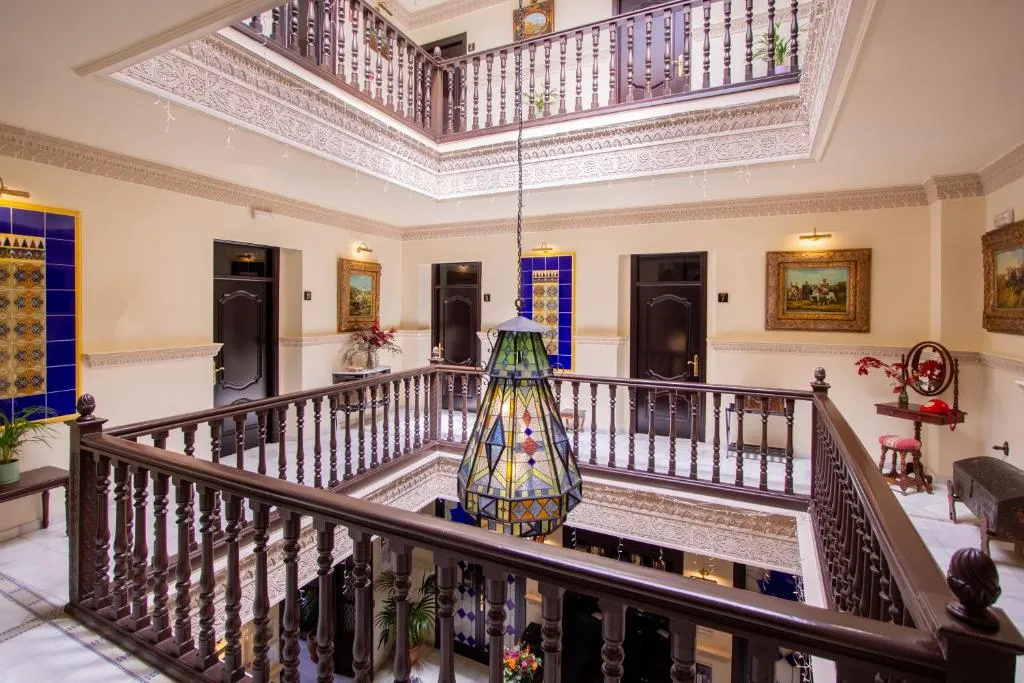
Hotel Palacio de Hemingway
A four-star hotel with air-conditioned, heated rooms, each with a flat-screen TV, a minibar and a coffee machine. The restaurant and wine bar, Pura Cepa, has a terrace and a long list of gin and tonics as well as wines. Pets are allowed, the hotel has a lift and a garage, and the staff can help you plan trips to the white villages.
Guests particularly appreciate the location and the staff. Comfort, cleanliness, the facilities and value for money are well rated. The Wi-Fi is the lowest-rated point, but its score is still good.
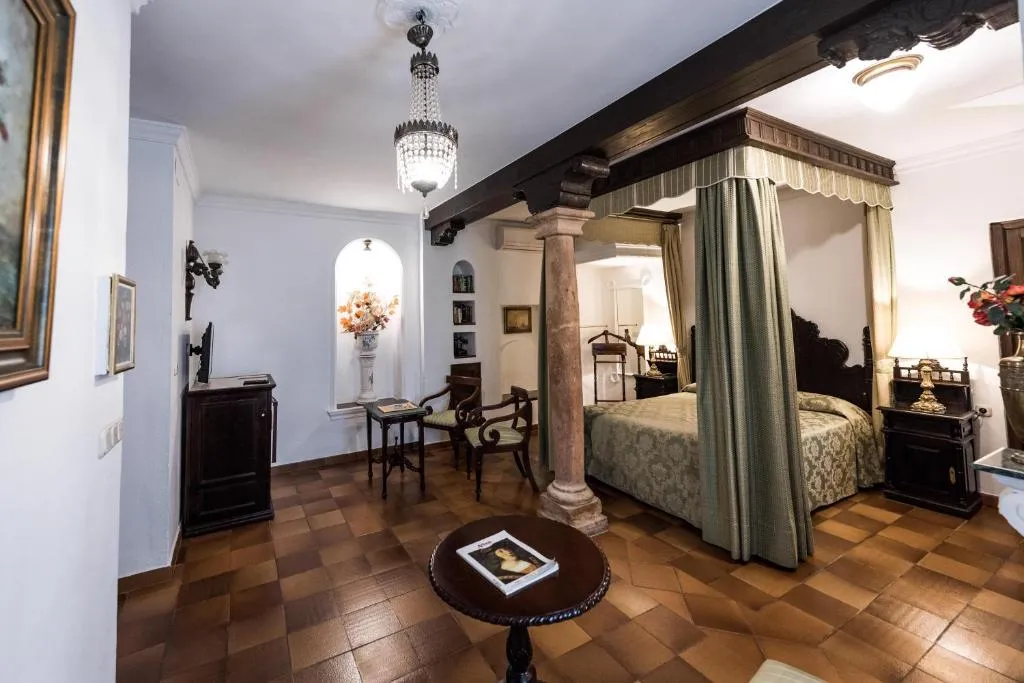
Hotel Soho Boutique Palacio San Gabriel
A four-star hotel with air-conditioned, heated rooms, each with satellite TV, a minibar and a coffee machine. Guests also have a library corner and a sun terrace. Family rooms are available, pets are allowed, and the 24-hour front desk can arrange bicycle and car hire.
Guests particularly appreciate the location and the staff. Comfort, cleanliness, value for money and the facilities are well rated. The Wi-Fi is the lowest-rated point.
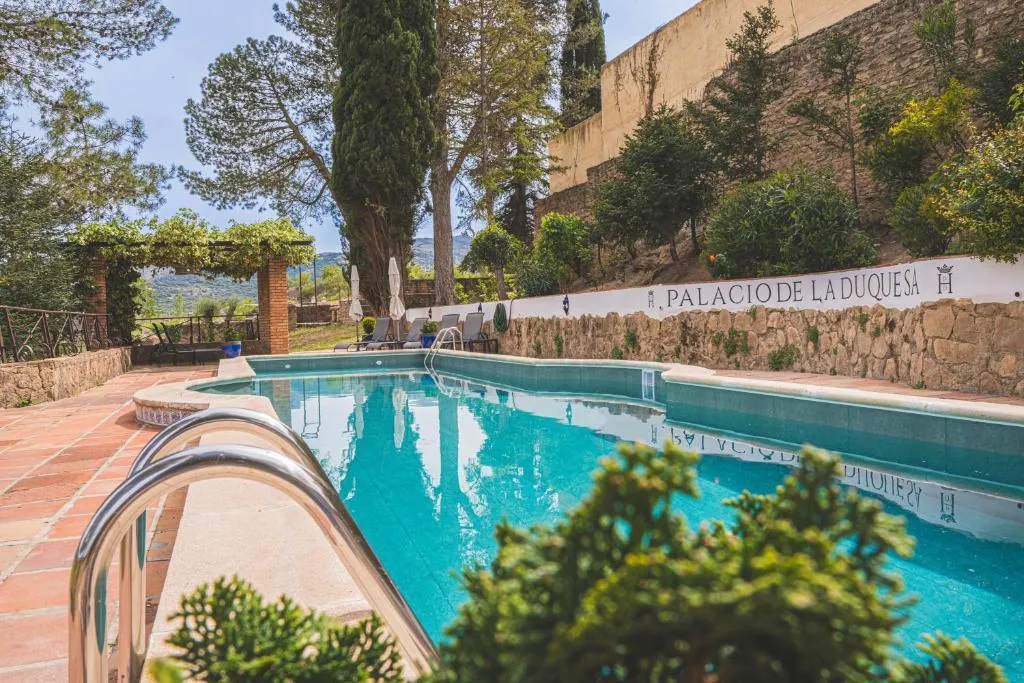
Hotel Boutique Palacio de la Duquesa
Rooms are air-conditioned and heated, with a minibar, a TV with streaming services and a work desk. The restaurant serves Spanish food in a family-friendly setting, there is a bar and room service, and the 24-hour front desk offers express check-in and check-out.
Guests particularly appreciate the staff, the location and the comfort. Cleanliness, the facilities and value for money are well rated. The Wi-Fi is the lowest-rated point.
Practical information
Most municipal sites stop letting visitors in half an hour before closing. If you plan to see several of them, the municipal bono turístico can work out cheaper: our guide to what to see in Ronda explains when it pays off. The municipal tourist office runs guided tours in Spanish from Monday to Saturday, for €10.
Our plan for a morning: a weekday, ideally a Tuesday or a Wednesday, the Casa del Gigante at 9:30 and Mondragón before 11:30 while entry is free, Santa María la Mayor when it opens at 10:00, then down through the Arco de Felipe V to the baths.
- Last entry: half an hour before closing at the municipal sites.
- Guided tours: in Spanish, Monday to Saturday, €10, from the municipal tourist office.
- Tourist office: Paseo Blas Infante, +34 952 18 71 19.
Frequently asked questions
How long do you need to see Ronda's old town?
Half a day is enough to walk La Ciudad from the Almocábar gate to the Arco de Felipe V and visit two or three sites, such as the Casa del Gigante, the Palacio de Mondragón and Santa María la Mayor. Add 60 to 90 minutes if you go down the water mine of the Casa del Rey Moro, and about 30 minutes for the Arab baths.
When are Ronda's monuments free to visit?
On Tuesdays and Wednesdays from 9:30 to 11:30, entry is free at the Casa del Gigante and the Baños Árabes, and at the Palacio de Mondragón for EU citizens. The Museo Joaquín Peinado is free on Mondays from 10:00 to 14:00. The gates, the walls and the churches of María Auxiliadora, La Merced and the Virgen de la Paz are free at any time, and children under 8 enter the municipal sites for free.